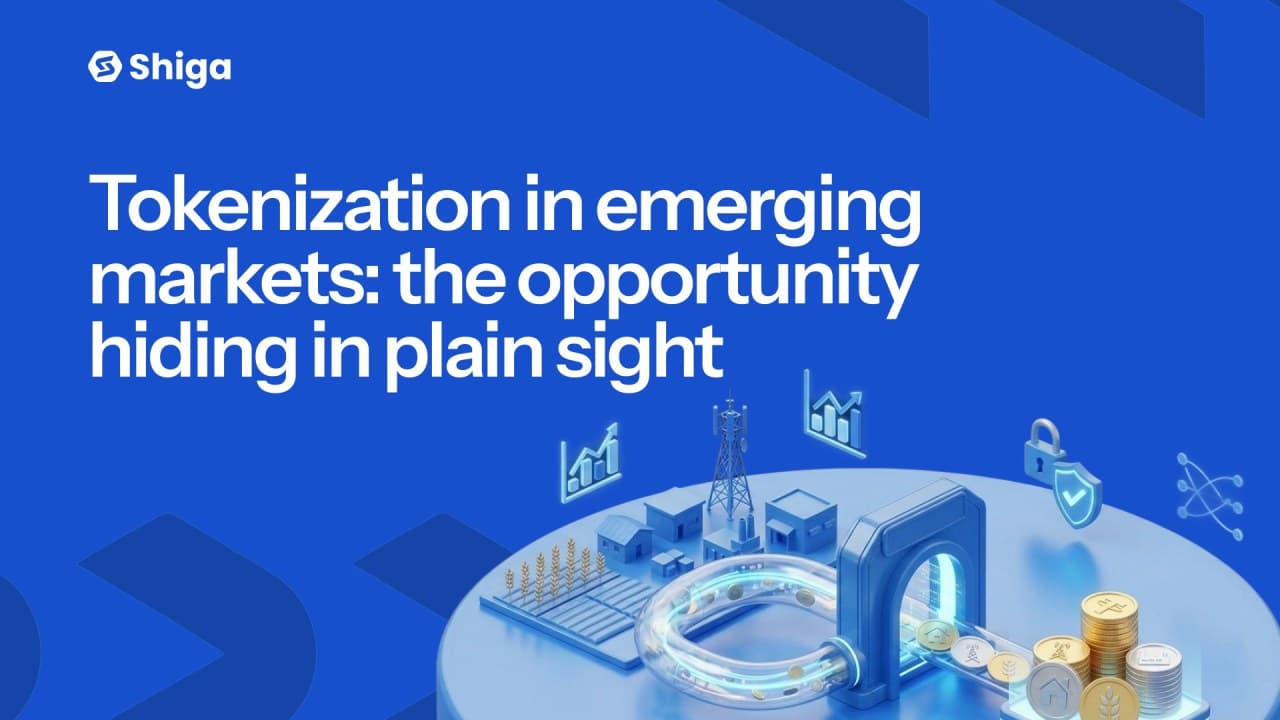
Tokenization tends to get discussed as a developed-market story: treasuries on-chain, funds wrapped as tokens, institutions experimenting at the edges. But the sharpest use case is hiding in plain sight in emerging markets, where the gap between what people need and what the existing infrastructure offers is widest.
The access problem
In much of Africa and the GCC, holding dollars, gold, or a diversified store of value is harder than it should be. Local rails are fragmented, cross-border settlement is slow, and the tools that do exist were rarely designed for the currencies and contexts people actually operate in.
Tokenised assets collapse that distance. A dollar-pegged stablecoin, tokenised gold, or Bitcoin can be held in the same place, moved instantly, and accessed directly from a local currency. No offshore account, no queue, no intermediary deciding whether you qualify.
Why it matters more here
- It widens access: value that was gated behind banks and brokers becomes reachable from a phone.
- It improves the rails: settlement moves from days to minutes, with a record attached to every step.
- It meets people where they are, starting from the local currency, not around it.
The opportunity is not tokenization for its own sake. It is the infrastructure it makes possible: a place where local currency, stablecoins, Bitcoin and gold live together, and where real transactions get done reliably.
That is exactly the platform Enta is building for more than fifteen markets, turning tokenised assets from a headline into everyday financial access.